On March 15th, my husband and I attended a special screening of the new film, Bad River. It will only be in select AMC theaters until March 20th so if you are able to see it, I urge you to. This screening in Traverse City was presented by the Oil & Water Don’t Mix Coalition, an organization here in Michigan dedicated to keeping oil out of the Great Lakes. This screening nearly sold out and I have to say I was very surprised. I honestly didn’t think people cared too much about this issue. It’s divisive in itself all throughout the US, and also divisive throughout Indian Country.
“The issue” at hand, and the subject of Bad River, is the Enbridge Company’s Line 5 oil pipeline which was built in 1953. The pipeline begins in Superior, WI and ends in Sarnia, Canada. Indigenous peoples both in Canada and the United States, along with many non-Native allies have spoken out and protested against this pipeline for many years, warning of the dangers the company potentially presents to the Great Lakes, which are 21% of the world’s freshwater supply.
This is not a future warning. Enbridge is already responsible for a long list of oil spills (the first being in 1988), including the Kalamazoo River oil spill in 2010 which was the largest and most costly inland oil spill in United States history. As the film portrays, Enbridge has a terrible safety record and also a lack of transparency when it comes to their business dealings. One of the stressed points of the Bad River film was not only do these potential spills affect tribal nations and lands, but the entire Great Lakes. As the title of this review states, “It’s your water, too.”
Bad River is not just a film about the threat of Enbridge’s pipelines, but also about people, specifically the Bad River Band of Lake Superior Chippewa in Wisconsin, who are currently in a fight with Enbridge over the pipeline running through their reservation which was discovered to be exposed after flooding occurred last Spring. The film included history of the Bad River people, most of which is difficult for an Anishinaabe like myself to sit through. I am an enrolled member of the Lac Courte Oreilles Band of Lake Superior Chippewa (Ojibwe) and am no stranger to the atrocities that have occurred against my people and the struggles that still continue for the Anishinaabeg today. Tribal sovereignty is at stake when pipelines come “rolling through the rez”, not to mention the wild rice (‘manoomin’ in the Ojibwe language, a staple crop for the Anishinaabeg for centuries) being put at risk. The White Earth Band of Ojibwe is currently engaged in their own fight against Enbridge’s Line 3 putting wild rice protection at the forefront of their fight.
The “oil boom” also coincides with the rise of violence and sex trafficking that occurs against Native American women, presenting another threat to an already marginalized and struggling community. The Bad River film doesn’t shy away from educating its audience about the tragedies the tribe has endured from residential school systems, the US government, the racism aimed toward its members, and the often trauma-fueled addiction issues that run rampant among Natives. I found these parts most difficult to watch. Intergenerational trauma is very real and my blood boils with it. It’s no surprise that I cried through this entire film and found myself wanting to leave the theater on a few occasions. The resiliency of the Anishinaabe people presented in the film (most who I feel were speaking directly to me at times) as they told their stories and offered words of hope and strength touched me and sometimes held me as I shook in my seat. One of the huge takeaways of the film for me was the importance of being rooted in tribal culture by attending ceremonies and powwows, and learning traditional Native languages and ways. I am currently learning Ojibwemowin and I know it’s going to take me the rest of my life to be fluent. At the end of the film an elder spoke strictly in the language and then said he hopes that all of the Anishinaabeg watching could understand what he was saying. I only knew a little of what he said. I sat there and sobbed uncontrollably. There’s a reason Native people are currently re-connecting with what was stolen from us. As a woman in the film states, “There’s always a threat” and Native American culture and preservation is still being threatened to this day.
The film had a few light-hearted stories interspersed throughout. I’m not sure if non-Natives could understand the humor in some of them or not, but I could. I should also mention that the movie was narrated by actor Edward Norton, who I love as an actor, but seriously, it didn’t matter to me. I was there to hear my people speak and they had my full attention. Anishinaabe culture was highlighted in the film, especially the importance of keeping a connection to it, and the impact being in touch with your people and their ways has on sobriety among Native Americans.
I mentioned the division that occurs throughout Indian Country over oil companies, and Bad River briefly touched upon that. Many indigenous people embrace Enbridge’s job offers and the monetary benefits that pipelines can bring to tribes. I can empathize with that struggle. I can’t expect some of my people (or anyone) to think of the next seven generations when they are struggling to feed their families who are alive right now. I was moved especially by a woman in the film who stated that “if you put money before the land and your people, they’ve already killed you, they’ve killed that part of you” (sic). I say this without judgment, but I agree. It seems like a huge success for those who have been determined to “kill the Indian, save the man” for centuries. However, I will say, we all have to survive in this world and money is obviously a necessity for survival. It doesn’t mean I like it, I just understand it. I do stand with the Water Protectors on this issue, and I care more about clean water, which we all need to live, than anything. (I will state for transparency that my own tribe, LCO, currently benefits from Enbridge deals and that I personally have unknowingly benefited from such deals. I have since educated myself and have made it a point to be in the know about these things in the future. Sovereign nation politics is often no different than US and World Politics and often we don’t know what our own leaders are up to until it’s too late.)
I struggled to write this and struggled even more when it came to making a decision on whether or not I wanted to share it. I remember something said to me once, “Damn, they’ve scared you about being indigenous, haven’t they?” Yes, many have, and on both sides of the fence. I’m a mixed-blood Native and I often find myself unsure of where I belong. Whites feel I’m not White enough, Natives feel I’m not Native enough. All I know is that I was raised Ojibwe, my Grandmother and Mother’s tribe, and that I made a decision to enroll once my blood quantum level was determined to be high enough for enrollment qualifications. (I could get into this issue and other Native issues in a series of blogs, but I’m probably not going to. I’ve got my own space to do that and a small group of off-rez Natives and I are currently hoping to make some tribal changes and to support each other as we reconnect to Ojibwe ways.) I’m not one for “identity politics” either. Yes, my culture is important to me. Yes, I want to live my culture and connect with it. Yes, the Anishinaabe way of life and walking the “Red Road” is the path I have chosen and the one that resonates with my Spirit. But at the end of the day, I’m a human. You’re a human. You can call me whatever you want to call me, but please acknowledge that I am only a human being. I’m only trying to survive just like you are trying to survive.
I’ll admit that it is in the spirit of defiance that the Bad River people have in the film that I am putting all of this out here. The biggest thing in my life that I have to defy is my own fear. Big corporations, government, certain groups of people who hate Natives just because, Native leaders who prefer to gatekeep our ways and traditions for whatever reason, or just anyone in general who could potentially harm me are high on my list of people I fear, but I’m trying not to live my life being so afraid anymore. The truth is important to me and I have a voice that can speak it. Or at least find out what “truth” even is because there are multiple sides to every story.
I’ve gotten way off topic. I’ll conclude by saying that I feel Bad River is a very important film. It’s well-shot, moves at a great pace, informative, and also has a really good soundtrack. Viewers can decide for themselves where they stand on the issue of pipelines, but remember, we ALL need clean water to live. If the movie is not available in your area, I have hope that it will be available through streaming eventually.
Nibi gaa-bimaaji’iwemagak. – “Water that gives life” in Ojibwemowin
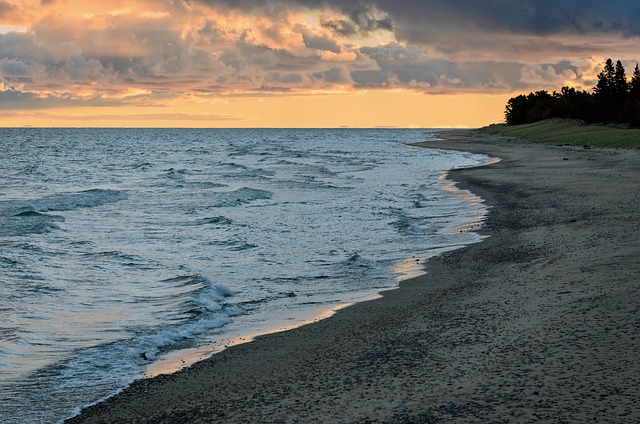
Image by csbonawitz from Pixabay
 Thistle Thoughts
Jennifer, your sharing about the film and about where you stand in the context of it is very much appreciated. So glad the theater was almost sold out. Do you mind if I reblog your review and essay on tao-talk?
LikeLiked by 2 people
Thank you for reading & for presenting the idea to write about it. You’re more than welcome to share. 💛
LikeLiked by 2 people
You’re welcome, Jennifer, and thank you ❤
LikeLiked by 1 person
This is such a beautiful weaving of the complications of modern Native life. As someone once told me-think for yourself, question authority. This also pertains to tribal leaders.
LikeLiked by 1 person
Thanks, Jen! Those are definitely much needed words to hear.
LikeLike
Thank you for sharing this review and suggestion. 🙏🏻
LikeLiked by 1 person
You’re welcome. Thanks for reading. 🙏💜
LikeLiked by 1 person
Jennifer, I am reading this because Li reblogged it. I am so glad you wrote this and shared. We all need to stand up for what is right and it takes courage to do so. Thank you. ❤️
LikeLiked by 1 person
Thank you ✊❤️
LikeLiked by 1 person
You are so welcome. ❤️
LikeLiked by 1 person
Powerful writing Jennifer! Yes, be fearless when you speak about injustice!
LikeLiked by 2 people
Thank you ✊🙂
LikeLiked by 1 person
Most welcome Jennifer!
LikeLiked by 1 person
This is one of the best reviews I’ve ever read. I’ve wanted to see this ever since I heard about it and it’s playing here now so I’m telling everyone about it. (I may have to wait for streaming because of current physical limitations, which sucks.) It’s one of the most important stories taking place right now, in so many ways, and I hope it inspires action and a lot of dialogue about our shared future.
LikeLiked by 1 person
Thank you! I’m positive it will be available on streaming soon. I don’t see how it couldn’t be, ya know? I would love to know your thoughts after you watch. Thank you for spreading the word about it. ❤
LikeLiked by 1 person
Thank you for sharing.Its sad what is has been happening.
LikeLiked by 1 person
Yes, it really is. Thank you for reading!
LikeLiked by 1 person
You are so welcome.
LikeLiked by 1 person
Jennifer, I love this so much, and I will try to see this film. Incidentally, I watched a documentary film called ‘River’ recently about humanity’s connection to rivers today and throughout history. It was beautiful and powerful and I am making the river a major metaphor and theme in my novel. The flow of the river is a symbol of life and how the beings in my novel want to be free. I feel I’ll have to watch this one too! Thanks for sharing.
LikeLiked by 1 person
Ooh I have to check this one out. Rivers are life veins for the earth for sure. ✊🩵
LikeLiked by 1 person